
Miami County Civil Docket Searches
Go to Indiana MyCase and pick Miami County. An exact case number works best in the Case tab. No number? Use the Name tab, last name first, or the Business field for an entity. Civil, Family, and Probate are separate Miami County categories there. Status and file-date filters help. They narrow things down when a name is common.
- Read the complaint, summons, notice, or order for the case number and court.
- Select Miami County and the most likely Civil, Family, or Probate category.
- Search the exact number, or search a party or business name with a date range.
- Match the court, case type, filed date, and parties before opening a result.
- Read the CCS in date order and ask the Clerk for the filed or certified document.
MyCase shows a public copy of nonconfidential Odyssey data. It is not the official record. A captcha may appear, broad results stop at 1,000, and some documents or restricted matters stay hidden. The courthouse terminal, the Room 208 counter, a Clerk request by phone, mail, or fax, and the Doxpop vendor layer all remain open as alternatives.
Miami Civil Work by Court
Civil work in Miami County does not sit in one courtroom. Circuit Court takes general civil claims. The list includes collections, torts, foreclosure, name changes, family matters, estates, guardianships, trusts, adoption, mental health, and evictions outside small claims. Superior II shares several of those civil and family case families. It adds civil prison cases, and it takes small-claims evictions. Other small claims go to Superior I under the local plan.
| Court | Examples of civil work |
|---|---|
| Miami Circuit, 52C01 | General civil, family, probate, adoption, and non-small-claims eviction |
| Superior I, 52D01 | Small claims except small-claims eviction |
| Superior II, 52D02 | Collections, tort, foreclosure, family, probate, civil prison cases, and small-claims eviction |
Trust the caption and case number. A category filter can help you find a case, but the court assignment shown in the actual record is what governs.
Civil Dockets: What They Show
The CCS is the chronological spine of a Miami County civil docket. It tells you a complaint, motion, notice, order, or judgment was filed. The linked document carries the real detail. Attachment of a document is a separate question. It depends on conversion and access rules.
| Case identity | Case number and type, court, style, filing date, status, and status date. |
|---|---|
| People and counsel | Plaintiff and defendant or petitioner and respondent roles, plus attorney association. |
| Connections | Cross-references and related cases when the system supplies them. |
| CCS sequence | Service, pleadings, motions, settings, continuances, orders, judgments, and later proceedings. |
| Documents and money | Document icons or names and an informational balance where available. |
A balance shown in the browser may leave out interest or other charges. Confirm the amount with the Clerk before paying, and do not treat a browser printout as a certified copy.
Miami Small-Claims Forms and Paths
The county's Small Claims Information page offers far more than the initial filing form. Its forms cover an alias notice, a counterclaim, a lost-title filing, proceedings supplemental, a continuance, dismissal, wage assignment, release of judgment, and release of garnishment. Ask the Clerk for the current version, filing method, and fee.
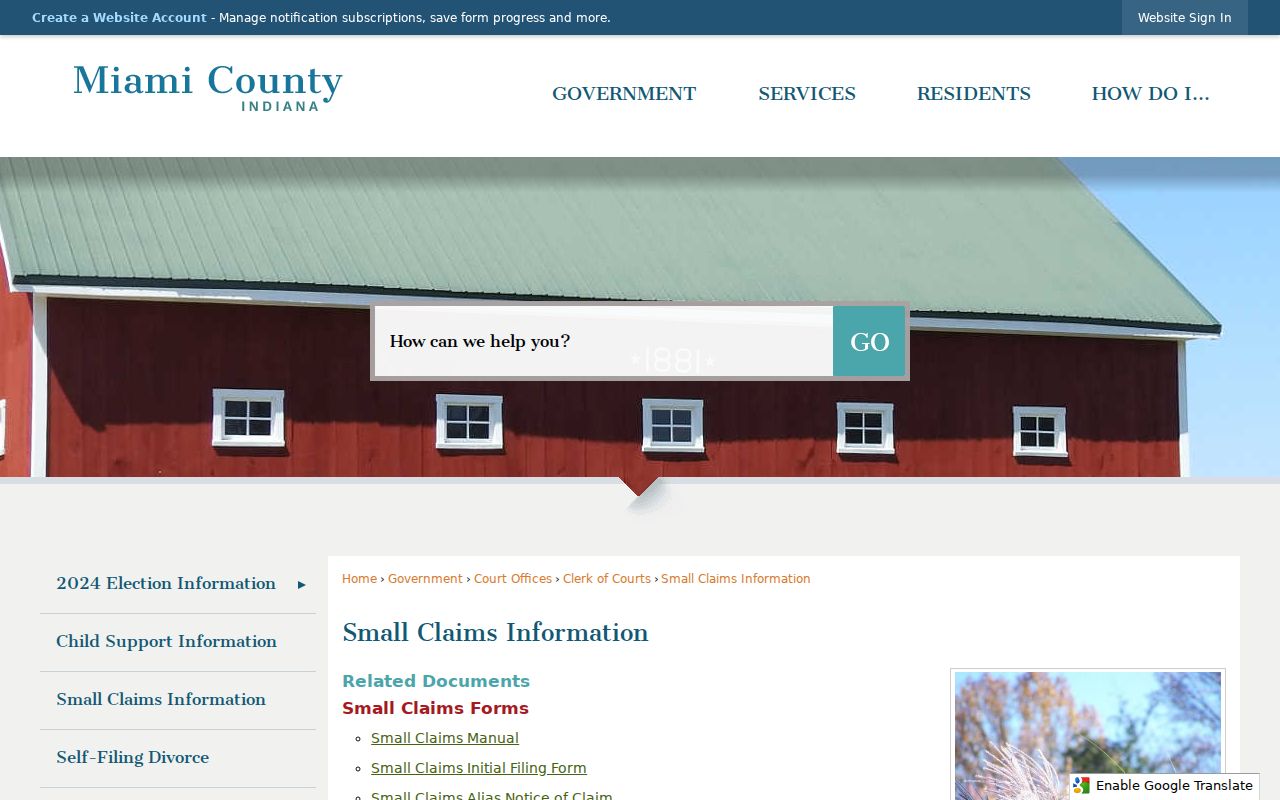
The county page shows why a CCS can keep growing after judgment. Enforcement, release, and supplemental proceedings all create later docket entries. Attorneys must e-file. Self-represented filers should follow current statewide and Clerk instructions on paper exemptions. Filing a document and viewing it are different acts. Indiana's e-filing system delivers filings, but MyCase displays only the public information the access rules allow.
What Cases Fill the Civil Docket
Miami County's public categories span a wide range of civil work. The 2024 certified ICOR chart breaks that down further. It counted plenary, mortgage foreclosure, collection, tort, small claim, eviction, domestic relations, reciprocal support, mental health, adoption, estate, guardianship, trust, protective-order, expungement, tax, and miscellaneous activity.
- Contract, collection, tort, foreclosure, and other general civil cases
- Small claims, including post-judgment proceedings and releases
- Eviction, with small-claims eviction assigned to Superior II
- Divorce, paternity, and other family matters where a public view is allowed
- Estate, guardianship, trust, and adoption matters subject to access limits
A category name is not the whole dispute. Read the case type and the CCS, then pull the filed pleading or order when the exact claim or ruling matters.
Miami Small-Claims Eviction Timing
Since January 1, 2023, small-claims evictions belong to Superior II. The official pro se guide requires named defendants and addresses at least 28 days before the initial hearing, and at least 10 days for service. It lists Friday initial hearings at 10:00 or 10:30 a.m., with damages hearings at 11:00 a.m.
Local distinction: the guide caps the eviction rent claim at $10,000 and says dismissal may seal the eviction record with a $10 administrative fee.
Those are guide details for this local procedure, not a promise that another civil dismissal will be sealed.
A setting can move, service can fail, and later orders can change the path. Check the current date in the CCS, the court calendar, a written notice, or with the Clerk.
Hearings on the Civil Docket
A civil setting can take many forms. It might be an initial hearing, a status hearing, a motion hearing, a final dissolution hearing, a guardianship setting, a proceeding supplemental, or a rule-to-show-cause event. The Trial Court Calendars system lists a lot. It shows the court, session date, time or timeslot, location, judge, category, and hearing description when those fields exist. A date on the calendar is not a result. A cancellation or reset should be checked against the later CCS entry or order. If a date truly matters, call the Clerk's hearing-date line at 765-472-2705 or the assigned court. The Clerk can confirm procedural information. It cannot tell a party what legal step to take next.
Miami Civil Filings by the Numbers
Certified 2024 ICOR activity for Miami County tells a clear story. It reported 765 collection filings, 438 small claims, 262 evictions, 54 plenary cases, 53 mortgage foreclosures, and 38 tort filings. On the family and probate side, the chart counted 70 domestic-relations cases with children, 94 without children, 20 adoptions, 5 estates, 46 unsupervised estates, and 51 guardianships.
These counts are new filing categories, not people, judgments, or pending totals. That is why a name-only Miami County civil docket search usually needs a court, type, and file-date filter too.
Who Can See Civil Dockets
Most Miami County civil material is open to anyone through MyCase. Some categories stay restricted, though, in whole or in part. Family, probate, protection-order, mental-health, juvenile, and sealed cases can all be limited. Indiana Access Rule 5 gives courts that power. A court can close an entire case, a single document, or just protected fields. A closed case is not the same as a fully public one.
Something missing? Check with the Clerk that you have the right court, the right case number, and the right item. The cause may be restriction, redaction, sealing, or a paper file never converted for online viewing. Indiana's Access to Public Records Act cannot override court access rules. The Clerk does not hold another agency's files. Visit Room 208 at 25 N Broadway, Peru, or call 765-472-3901. Ask before mailing or faxing. The Clerk sets no universal copy fee and offers no public email form. Name the exact document and say whether you need certification. Pick your delivery method. Ask for the current cost and accepted payment.
A good copy request lists the case number, the entry date, and the document title. Say whether you want an ordinary or certified copy. Settle paper or electronic delivery, price, payment, and turnaround before you send money. A transcript is a different product made through the court reporter. A Doxpop result is not certification. Neither is a browser printout. Keeping those distinctions straight saves you from ordering the wrong thing.
Handle family and probate court records with extra care. A public case can still hold financial, health, child, or protected-party details. Use only the view the access rules permit. Never rebuild an excluded fact from related cases, later docket entries, or another agency's records. Protection-order and mental-health matters may show little or nothing even when the docket search works exactly as designed.
Miami Civil and Bankruptcy Records
Bankruptcy never shows up as a Miami County civil case. The county sits inside the Northern District of Indiana Bankruptcy Court. Its dockets run on chapter, claim, plan, conversion, dismissal, discharge, and trustee fields. You search those dockets in PACER or through the federal Bankruptcy Clerk, never in Indiana MyCase. The official PACER court profile names that Northern District court. It lists Miami County within its coverage.
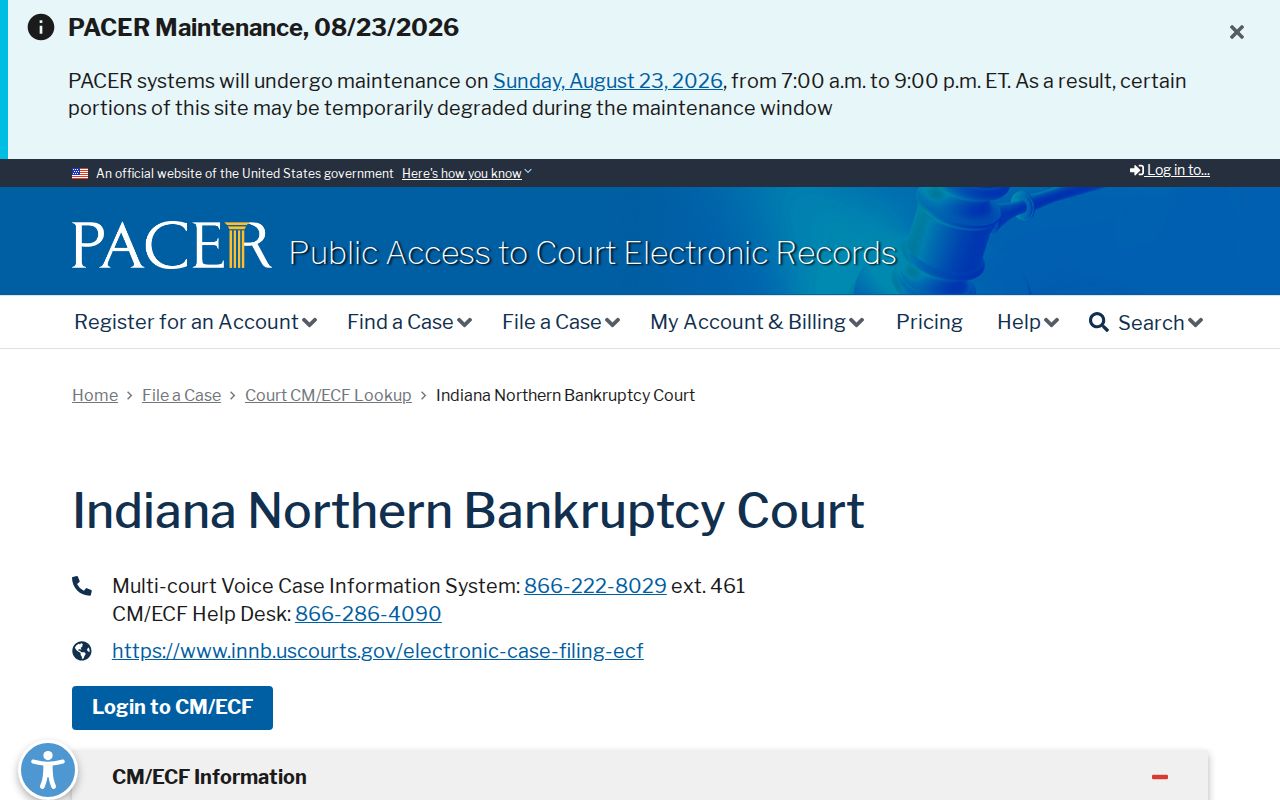
That federal profile keeps a bankruptcy docket search separate from the county's civil, family, probate, and small-claims categories.